
The Scope: Floating Offshore Wind in Deep Pacific Waters
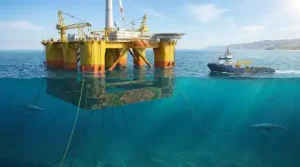
Unlike traditional offshore wind turbines along the US East Coast or in Europe’s North Sea—which are fixed directly into relatively shallow ocean floors—California’s continental shelf drops off rapidly. The turbines designated for the Pacific Ocean require floating platform technology anchored to the seabed in waters ranging from 1,000 to 3,000 feet deep.
The state has established ambitious targets under Assembly Bill 525, aiming for 2 to 5 gigawatts (GW) of offshore wind capacity by 2030 and 25 GW by 2045. The Morro Bay Wind Energy Area alone encompasses over 370,000 acres located approximately 20 to 30 miles off the coast of Cambria and Morro Bay. Once fully developed, this zone is projected to generate roughly 3 GW of clean power—enough to electricity over 1 million California homes.
How Humboldt and Morro Bay Complement Each Other
California’s offshore wind strategy relies on a coordinated regional port ecosystem. Understanding the interplay between Humboldt Bay and San Luis Obispo County helps clarify why both regions are moving forward simultaneously:
- Humboldt Bay (Assembly & Heavy Logistics): With deep-water navigation channels and no overhead bridge obstructions, Humboldt Bay is being engineered as a primary heavy-lift, staging, and assembly terminal where massive turbine blades and floating foundations will be put together.
- Morro Bay & Port San Luis (Grid Interconnection & O&M): While SLO County’s coastline lacks the heavy industrial port footprint required for primary manufacturing, its proximity to existing high-capacity electrical infrastructure makes it the ultimate landing point for clean energy transmission. Local facilities like Port San Luis and Morro Bay Harbor are slated to play crucial long-term roles in Operations & Maintenance (O&M), supporting crew transfer vessels, marine monitoring, and technical services.
Economic Opportunities for San Luis Obispo County
The influx of federal and private capital into the Morro Bay Wind Energy Area represents a multi-billion-dollar investment cycle over the next two decades. For San Luis Obispo County, the economic ripples extend far beyond energy generation.
1. High-Skilled Maritime & Technical Jobs
Long-term Operations & Maintenance (O&M) hubs require permanent onshore technical teams, specialized vessel crews, subsea robotic operators, and electrical engineers. Over a 30-year lifecycle, these facilities provide stable, high-paying jobs that help diversify SLO County’s regional economy beyond tourism and agriculture.
2. Commercial Harbor & Port Investments
Federal funding through port infrastructure programs and state grants are directed toward revitalizing local maritime access. Waterfront improvements at Port San Luis and Morro Bay aim to upgrade dock facilities, repair seawalls, and integrate clean fuel infrastructure for marine support vessels.
3. Supply Chain Expansion
Local contractors across structural engineering, electrical distribution, environmental monitoring, fabrication, and marine logistics stand to secure secondary contracts as offshore field surveys and preliminary design work expand.
Leveraging the Power of the Diablo Canyon Transmission Grid
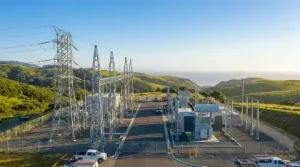 One of the primary reasons the Central Coast was selected for floating offshore wind is its unmatched electrical transmission capacity. With the eventual retirement planning surrounding the Diablo Canyon Power Plant, San Luis Obispo County possesses high-voltage interconnect points capable of receiving large volumes of offshore power and routing it directly into the state’s main energy grid without requiring thousands of miles of new overland transmission lines.
Subsea export cables carrying high-voltage direct current (HVDC) will run from floating offshore substations to designated coastal landfall locations, where converter stations will transition the power to AC current for grid distribution. According to planning reports monitored by the Bureau of Ocean Energy Management (BOEM), utilizing this existing infrastructure significantly reduces the overall environmental impact of land-based construction.
Addressing Local Community Concerns & Environmental Protections
An industrial transition of this magnitude naturally brings important community questions regarding marine ecology, commercial fishing access, viewsheds, and cultural heritage.
| Key Concern | Community Impact | Mitigation Strategy & Ongoing Review |
|---|---|---|
| Marine Wildlife Safety | Potential entanglement risks from floating mooring lines and acoustic disruption to marine mammals. | Deployment of mid-water tensioned mooring lines, passive acoustic monitoring, and real-time mammal detection during vessel transit and field surveys. |
| Commercial Fishing Access | Navigation restrictions near turbine arrays and floating substation footprints in traditional fishing grounds. | Establishment of regional fishing mitigation funds, direct co-existence agreements with local fleets, and continuous mapping of active fishing corridors. |
| Visual & Cultural Protection | Impact on coastal vistas and sensitive tribal marine heritage sites. | Positioning turbines 20+ miles offshore minimizes visual footprint from land. Coordinated planning with the designated Chumash Heritage National Marine Sanctuary ensures protection of culturally vital marine areas. |
The Road Ahead: Timeline for San Luis Obispo County
Although offshore lease areas were awarded in late 2022, residents should expect a methodical, multi-year survey and permitting process before physical offshore construction begins:
- 2024–2028 (Site Assessment & Marine Surveys): Lessees are actively conducting geophysical and oceanographic surveys, marine mammal monitoring, and submitting Site Assessment Plans (SAPs) to BOEM for federal review.
- 2028–2030 (Environmental Impact Analysis & Public Review): Comprehensive National Environmental Policy Act (NEPA) and California Environmental Quality Act (CEQA) reviews will take place, including public hearings across SLO County.
- 2030 and Beyond (Construction & Commissioning): Following final approvals of Construction and Operations Plans (COPs), onshore infrastructure modifications, cable landing installation, and turbine offshore placement will commence.
Looking Forward
The floating offshore wind projects developing off Humboldt and Morro Bay mark a historic milestone in California’s clean energy evolution. For San Luis Obispo County, this initiative balances the preservation of iconic coastal environments with new economic diversification, high-value maritime jobs, and a central role in powering California’s zero-carbon future.